

When setting up a warehouse, fulfillment station, or even a compact packing area at home, it may seem tempting to use a standard workbench. But the reality is that a regular workbench simply isn’t designed for the demands of order fulfillment. A packing table is purpose-built for speed, accuracy, organization, and comfort. This blog explores the unique features of packing tables, how they differ from ordinary workbenches, and which setup best suits modern operations.
A packing table is designed to be more than just a flat surface. It functions as a central hub where every tool and material is organized and within reach, making packing faster, safer, and more efficient.
Built-in shelving keeps tape, boxes, and packing slips neatly arranged
Cutter rails allow quick, clean cuts of packaging materials
Roll holders support kraft paper, bubble wrap, and other fillers
Hooks & side platforms keep tools tidy and store filling machines or bags
Protective surfaces like cut-resistant mats safeguard products and the tabletop
Tech integration with monitor mounts, CPU brackets, keyboard trays, and printer shelves streamlines digital workflows
By combining these features, a packing table minimizes unnecessary movement and interruptions, turning repetitive packing tasks into a smooth, optimized process.
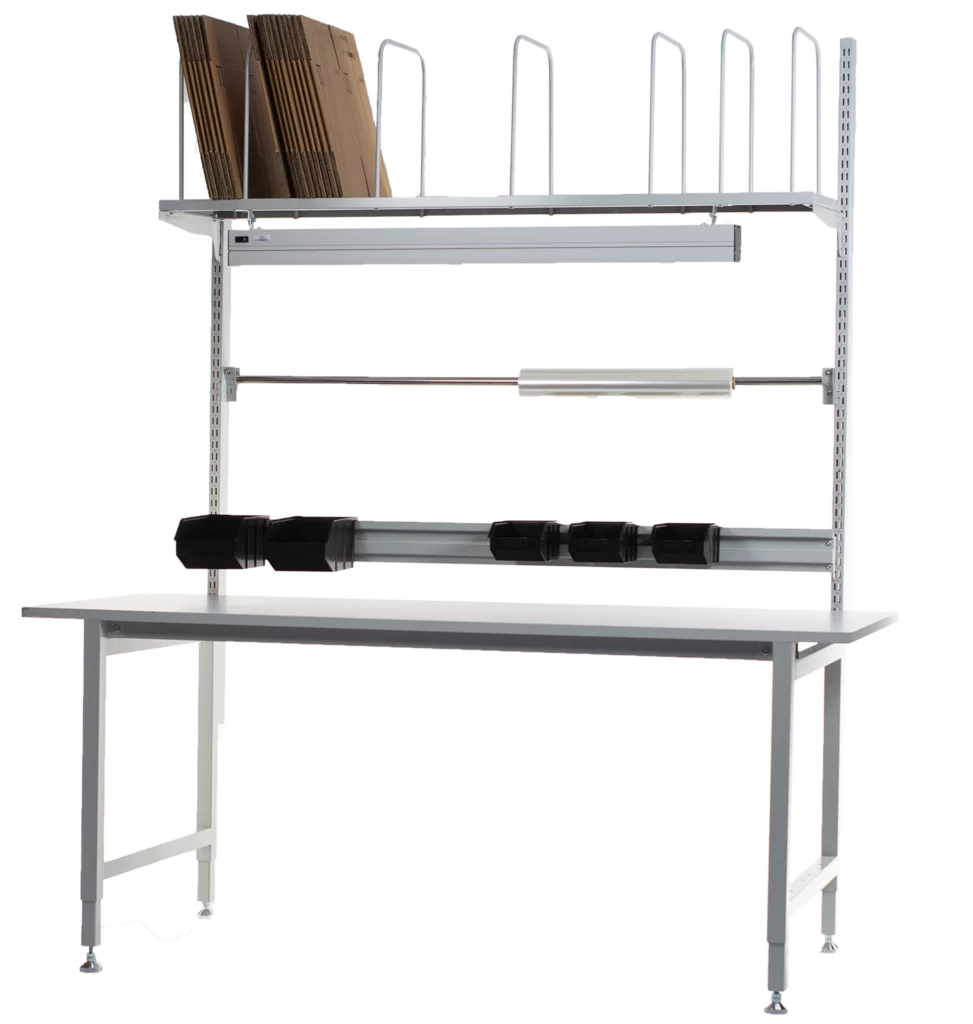
Packing is a repetitive task performed dozens or even hundreds of times per day. Ergonomic packing tables reduce strain with adjustable heights, reach-optimized layouts, angled keyboard trays, and monitor mounts. Anti-fatigue mats add comfort during long shifts. Warehouses that adopt ergonomic packing stations report fewer injuries, higher employee satisfaction, and improved accuracy.
For very low order volumes or early-stage businesses, a regular workbench may suffice temporarily. However, the lack of integrated storage, poor ergonomics, and absence of designated spaces for packaging materials quickly become limiting factors. As soon as daily order volumes increase, the shortcomings of a standard workbench hinder productivity.
Packing tables are not just upgraded benches they are task-specific workstations designed for efficiency, comfort, and consistency. With features like cutter bars, roll holders, side platforms, monitor integration, and tool hooks, they create optimized packing environments that scale with your business. Investing in a packing table setup pays off in time saved, reduced errors, and smoother operations.