

Static electricity is a hidden risk in any environment where sensitive electronics are handled. A single discharge can damage circuits, cause failures, and lead to costly downtime. Preventing buildup requires a layered approach that combines smart design, proper materials, and employee awareness.
Causes of static buildup
Charges form through friction, movement, and dry air. Walking on synthetic floors, handling plastics, or working on non-conductive surfaces all increase risk. Low humidity (below 40%) makes it worse, while conveyor belts and tools add additional friction.
Grounding practices
The foundation of ESD control is grounding. Use wrist straps, dissipative mats, and grounded workstations to keep everything at the same potential. Conductive flooring paired with ESD footwear ensures mobile workers stay protected. Regular testing with a megohmmeter keeps systems reliable.
Anti-Static materials & tools
Choose surfaces and tools that dissipate charges rather than insulate them. ESD mats, clothing with conductive fibers, static-shielding packaging, and ionizers all reduce buildup. Compliance with standards like IEC 61340-5-1 and ANSI/ESD S20.20 ensures effectiveness.
Humidity control
Maintaining 40–60% relative humidity helps charges dissipate naturally. Humidifiers and hygrometers stabilize conditions, but humidity alone is not enough combine it with grounding and proper materials.
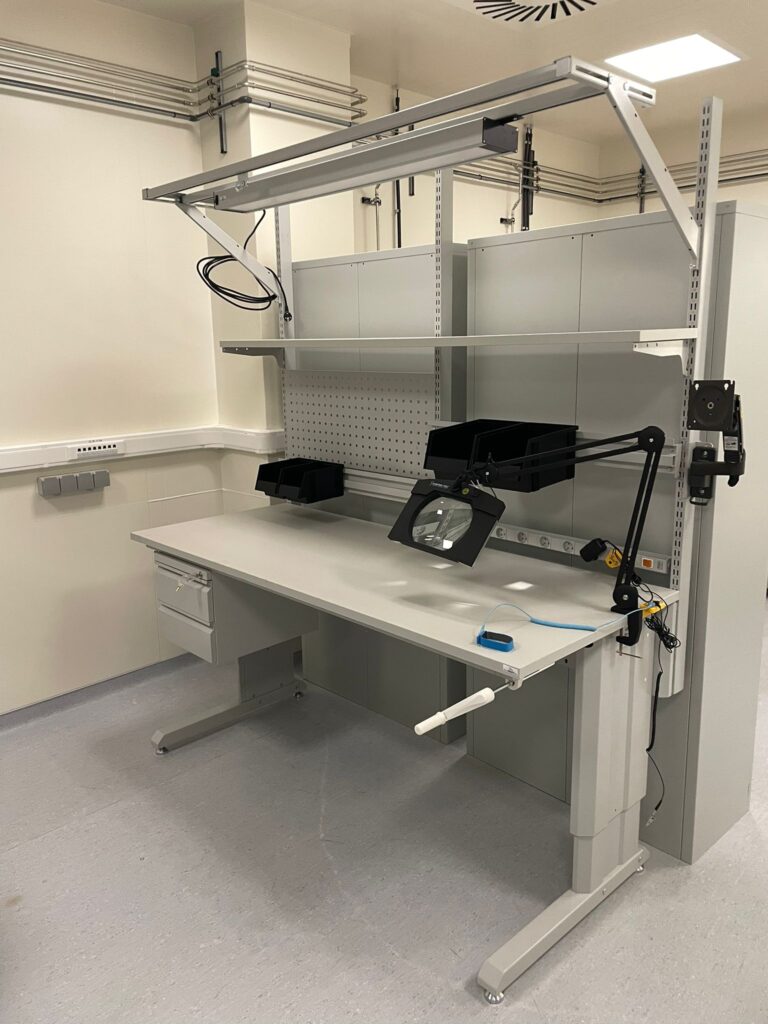
Training is critical. Workers should understand ESD risks, wear proper attire, and follow EPA (Electrostatic Protected Area) rules. Regular refreshers and documentation improve compliance and reduce errors.
ESD protection is only effective if maintained. Clean mats with ESD-safe products, test straps and flooring regularly, and calibrate ionizers. Scheduled audits ensure long-term reliability.
Reducing static electricity isn’t about one solution it’s about combining grounding, materials, humidity control, training, and maintenance. Ergonomic, ESD-safe workstations protect electronics, improve productivity, and safeguard your business.